
If you have been watching the news, you may have now…
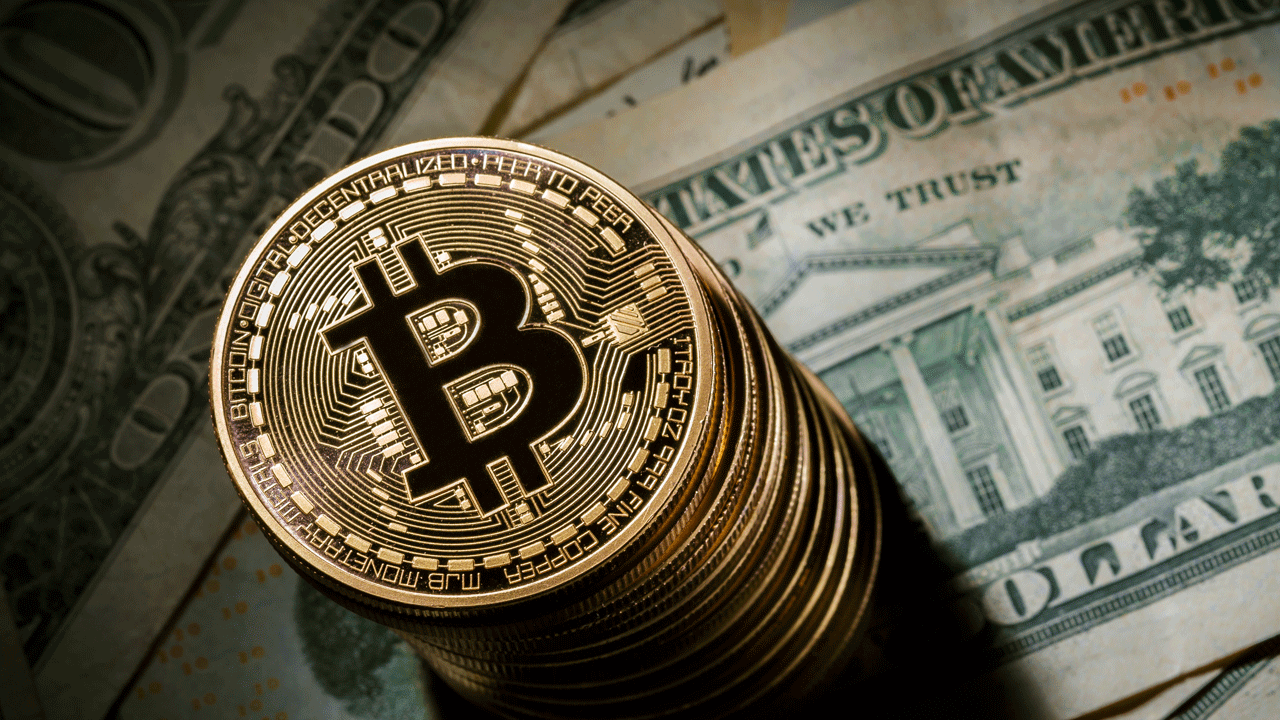
Bitcoin and Privatized Banking, Article First of ?
At the start of 2017 I wrote a blog about bitcoin as it crossed the $1000 price point. After recent conversations with some very intelligent people, excited about bitcoin and crypto-currencies, I thought it was best to discuss the relationship between bitcoin and privatized banking.
The first question: What will happen to my privatized bank if bitcoin becomes more and more dominant? The answer is: nothing. The difference in privatized banking and commercial banking is that our money (privatized banking) is loaned to industry and converted promptly into real capital items. Our financial institution, the insurance industry, is not sitting on piles of cash, holding only enough to pay the current year’s expected benefits, surrenders, and policy loans. As bitcoin or the next crypto-currency slowly evolves into the money of choice, it will be introduced into our banking system in stages, first perhaps as a form of premium payment, then used to transfer to our borrowers. Who knows, someday our policy illustrations may be illustrated purely in percentage gains versus US Dollar values.
This change will be many years in completing. Even though we privatized bankers think long-term, our partners, the insurance companies, are also long-term thinkers. As the use of alternative monies become stable enough to store and grow our wealth, so too will the insurance companies incorporate it in their planning and operations as well.
Remember, just because a currency goes away, money does not. Capital does not. Which is why commercial banks can fail as the US dollar loses more and more of its purchasing power, but our asset holdings in the form of bonds for real capital, will not. As long as those businesses use our money to produce goods and services that other people will pay for, whether in dollars or in bitcoin, nothing changes. I predict that as things change, repayment clauses will be modified in our lending contracts (bonds) to take repayments in multiple ways, including bitcoin.
The other question is of course: Should I be buying these crypto-currencies? As is my policy of as a banking consultant, I never advise anyone to purchase any investment. Investments have to be made with money that you can afford to lose (or can control the risk). Some form of crypto-currency, whether backed by physical commodities or the ineffable essence of mathematics, will ultimately be the way we store and transmit money. Which one of the crypto-currencies, no one knows. It is certainly a great temptation and perhaps an opportunity to invest in these items. Some folks have done very well. This is entirely up to you. We all have to make our own personal decision about how much we place in a known and guaranteed growth environment, like a personal bank, and that which we put into a new currency that will absolutely have up-and-down fluctuations. You must set your own risk threshold, and decide how much, if any, short term downside you can tolerate. We are currently in a speculation phase of the monetary change, so it will be a bumpy ride. Check out my article on PracticalPoliticking.com for more.
No matter what money we use, we will always need to grow it. If we imagine a future that has only bitcoin, we will still have the need to make that money be productive by virtue of real people investing real time and thought in creating real items of value for people. The realities of economics will not change.
We find ourselves in a very exciting, and scary, era of change. In such times there are great opportunities for both profit and loss. I feel lucky be in the middle of it. I have every confidence that our industry will adapt to this technology as it becomes more familiar to both policyholders as well as prospective borrowers.

Related Posts



Comments (0)